
WHY WOULD I USE FRINGE BENEFITS, AS A SMALL EMPLOYER?
As a small business, perhaps a start-up or a family business you may not have the finances to beat the large companies to the best staff, but you can offer fantastic incentives to get them on board and create the right environment for them, and your business, to thrive.
Employees are often motivated by more than just the money. It is an environment of mutual support that helps people go the extra mile for their boss. This may be that you provide a great café quality coffee machine onsite but it may be the things outside of work that help them stay focused and well that keep them motivated.
1. WHAT ARE FRINGE BENEFITS
Fringe benefits are non-monetary things given to employees outside of their salary or wages.
- They may include the use of the company car for personal time.
- Tickets to concerts or restaurant vouchers.
- Gym memberships
- Discount loan or accommodation.
- It is NOT shares for the employee under an agreed scheme.
- Employees exit package bonuses.
- Superannuation paid by the employer.
- Benefits paid to volunteers or contractors.
2. HOW DOES IT APPLY
FBT is considered to be some of the most complicated tax laws for small business. There are many concessions to fringe benefits and ways to keep it down while essentially still offering the same services.
In a nutshell, when working out your FBT liability you must gross-up the taxable value of benefits you provide, to reflect the gross salary employees would have to earn at the highest marginal tax rate (including Medicare levy) to buy the benefits after paying tax.
It can be hard to figure out how to get the most out of providing for your employees but talking to your accountants can help clear things up.
Benefits that are income tax deductible may not attract FBT. Using a taxi instead of an Uber will not attract FBT. Also, Small businesses can provide more than 1 portable electronic device to employees and any benefits worth less than $300 may be considered a minor benefits and not subject to the same taxes.
Definitely worth talking to a professional to see which items can be minimised for you.
3. WHAT ARE THE BENEFITS OF FRINGE BENEFITS?
Fringe benefits demonstrate commitment and often faith in your employees and can be used to attract and maintain the best quality employees.
Not all fringe benefits will come at a higher cost to you as the employer but it is about hearing your employee and what matters to them.
- Work life balance may be the pinch pin for some so offering work from home options or flexibility in hours may be all it takes to allow them to attend a ballet recital and therefore stay onboard as they may not get this elsewhere, and it does not have to cost you anything.
- Demonstrating commitment to their career progression and available training may be another good one worth looking into. Often subsidised by the government already educational packages can give more bang for their buck.
4. WHEN IS FRINGE BENEFITS TAX DUE?
Unlike income tax Fringe Benefits Tax is calculated by the employer at the start of April. It runs from April 1 until March 31 every year. It is important as a small business to put it on your calendar.
Using Single touch payroll may be a great option for you, being an ATO initiative to try and streamline tax reporting. It can assist with calculations for you and help take out the headache, but it may not be for everyone and We recommend talking with your accountant to make sure everything is accounted for.
Fringe Benefits Tax is often considered Australia’s most complicated tax laws, DON’T get caught out, talk to your financial advisor or qualified tax accountant today.
https://www.abatax.com.au/the-essential-small-business-guide-to-fringe-benefits-tax/
https://www.commbank.com.au/articles/tax/quick-guide-to-fringe-benefits-tax.html
https://www.roberthalf.com.au/management-advice/performance/employee-benefits
Read More

How to Encourage Kids to have a Positive Relationship With Money
As children get older, they undoubtedly develop a taste for more expensive items. Encourage them to save for the big item if they love to save but make the purchase happen when the goal is reached. Sometimes parting with money can be as hard as saving depending on the individual.
Read More
How an Investment Property Portfolio Can Benefit your Retirement
Investment properties don’t come with a quick-access bucket of cash. Rather, they are more like a slow trickle that could lead to overflowing when done well.
Read More
2 Ways Negative Gearing Can Work for You.
‘Negative Gearing’ is a very common tax–time discussion topic in Australia. The term, coined by middle to high-income earners, essentially describes financial situations where the expenses associated with an asset are greater than the income earned. Some people may question whether the tax write-offs are actually worth the benefit. In some cases, we believe it is, which is why we have outlined two ways negatively gearing can work for you.
But First … A little more about what is negative gearing
Negative gearing can apply to any asset or investment, not just housing.
The Australian Treasury best describes it:
“Individuals who are negatively geared can deduct their loss against other income, such as salary and wages. This is consistent with the broader operation of Australia’s personal income tax system.
Australia’s tax system operates on the principle that people pay tax on their personal income, less any expenses (called deductions) in generating that income. This is similar to how business profits (that is, income less expenses) are taxed, i.e. tax is levied on the net profit of a business, not its gross revenue.
Deductions for costs incurred in producing income recognise that different people have different costs in producing income.”
#1. Property
Negatively gearing and rental property is a common word association in Australia. Of course, most people get into the property market to make money, but because of its volatility, it is never a sure thing. Yes, you earn income from the rent, but because of the upkeep and expenses of the property, sometimes the rental will run at a loss.
Under Australian legislation, an investor is allowed to claim certain losses from their investment properties against their taxable income. Here is an example of how it is calculated:
- Yearly rental income: $30,000
- Less yearly expenses: $36,500
- Landlord insurance: $1,500
- Mortgage interest: $25,000
- Repairs and maintenance: $5,000
- Property manager: $5000
- Taxable loss or write off $6,500.
This $6,500 expense will reduce your total taxable salary.
These are just some of the expenses which you can claim. There are others such as body corporate levies, land tax, rates and water etc. For a full list, please visit the ATO website or talk to your accountant.
#2. Shares
If you borrow money to invest in shares and the dividends from the shares are less than the interest on the loan, then you can claim that as a write-off.
For example, if you purchase EFT Shares which provide a return of $9,000, but the interest on your purchase loan equates to $10,000 per year, then you will have a loss of $1,000.
Risks Associated with Negative Gearing
While the above examples may sound great, you need to be aware of the potential pitfalls.
The first is that certain expenses are capped, meaning not all losses are going be claimable. Therefore, any surplus which can’t be claimed will come out of your back pocket.
The same can be said of the rental market. What happens if you can’t fill a vacancy? You cannot claim for a property which isn’t earning rental income.
Finally, you need to weigh the risk against the reward. Can you afford to maintain these tax write-offs? Negatively gearing only makes sense in the short term, as you will want an eventual gain, and you may even want that gain to be greater than the losses incurred while holding the asset.
Understanding what you can claim, and what you cannot, can get very confusing. And, when you get it wrong, it can lead to headaches and possible penalties with the Australian Tax Office. To avoid these extra stressors, we always recommend you seek expert advice. At Synergy Accountants and Estate Planners, we stay up-to-date with all the latest legislation and offer stress-free solutions to our clients.
To find out more, please book an appointment.
*Disclaimer* The abovementioned advice is true and correct as at the date of publication. The information contained in this blog is to be considered a guide only and is not intended to be used in lieu of advice received from your registered accountant or tax agent.
Read More
How to Minimise your Business Tax Debt
At the end of 2019, the Australian Tax Office registered almost $15billion worth of debt owed to them by small business owners. That’s a staggering number; particularly when you consider that most small business owners are mum and dad operations juggling their cash flow. And, many of these business owners would say that that money is better off in their pockets than with the Government. So, if you are one of these small business owners, then you are probably wondering how you can minimise your business tax debt.
What is a claimable deduction?
The Australian Tax Office (ATO) has a relatively diverse list of what is and is not a claimable business expense. The questions which business owners need to ask themselves are:
- Was the expense for business use – as opposed to private use?
- If the expense has been split for both business and private use (i.e. home internet) then can you easily calculate the portion used by your business?
- Do you have accurate records to verify the expense?
If you answered yes to these questions, then you can lodge them as a business tax deduction.
What sort of records need to be kept?
If you are claiming business deductions, you must keep a substantial record. The records can be kept in either paper form or electronically (i.e. an emailed receipt), and they must be in English or able to be easily converted to English.
Examples of the records you should be keeping include:
- Asset acquisition such as tools needed for your business or vehicles or stationery and incidentals; and
- Tax-deductible gifts, donations or contributions
The Australian Tax Office law is that these records are to be kept for five (5) years after claiming, just in case you are ever called upon to produce these records to the ATO.
What about GST?
GST is a little trickier because it cannot be claimed as a tax deduction if you have claimed it as a credit on your Business Activity Statement (BAS).
Also, if your business is not registered for GST, the full amount of the expense can be claimed as a tax deduction.
Offsets and rebates for your business
Small businesses are also entitled to tax offsets and rebates, which can reduce the amount of tax a small business pays by $1,000 each year.
The eligibility for the concession changes regularly and is calculated using your tax return. For more information, or to work out your offset, visit the ATO website.
What isn’t a claimable business tax deduction?
Again, the ATO has kindly provided a list of non-claimable deductions, including:
- Entertainment expenses
- Traffic fines including parking fines
- Domestic expenses such as childcare fees or general clothes (excluding work uniforms)
- Expenses incurred for a hobby business
What about travel expenses
One of the most frequently asked questions for business owners is about the use of motor vehicles. As a business owner, you can claim a tax deduction for a vehicle which was used in the running of your business.
More information regarding the use of your vehicle for tax expenses can be found in this handy printable flyer.
If you do get into trouble with repaying your business tax debt
We understand that sometimes things happen and cashflow is tight. Despite public opinion, the tax office can be reasonably easy to deal with, and they are willing to enter into payment arrangements. Your first step should always be to contact the ATO because they cannot help you if they don’t know what is happening.
If your debt is $100,000 or less, you can propose a payment plan online through the business portal, or via your registered tax or BAS agent. Alternatively, you can contact the ATO on 13 72 26, 24 hours a day, 7 days a week.
Businesses with a debt greater than $100,000 can contact the ATO on 13 11 42, Monday to Friday between 8am to 6pm.
When it all gets too much
Tax time is confusing and often frustrating for many business owners. If you find yourself flustered by your tax time obligations, the team at Synergy Accountants and Estate Planners are here to help.
*Disclaimer* The abovementioned advice is true and correct as at the date of publication. The information contained in this blog is to be considered a guide only and is not intended to be used in lieu of advice received from your registered accountant or tax agent.
Read More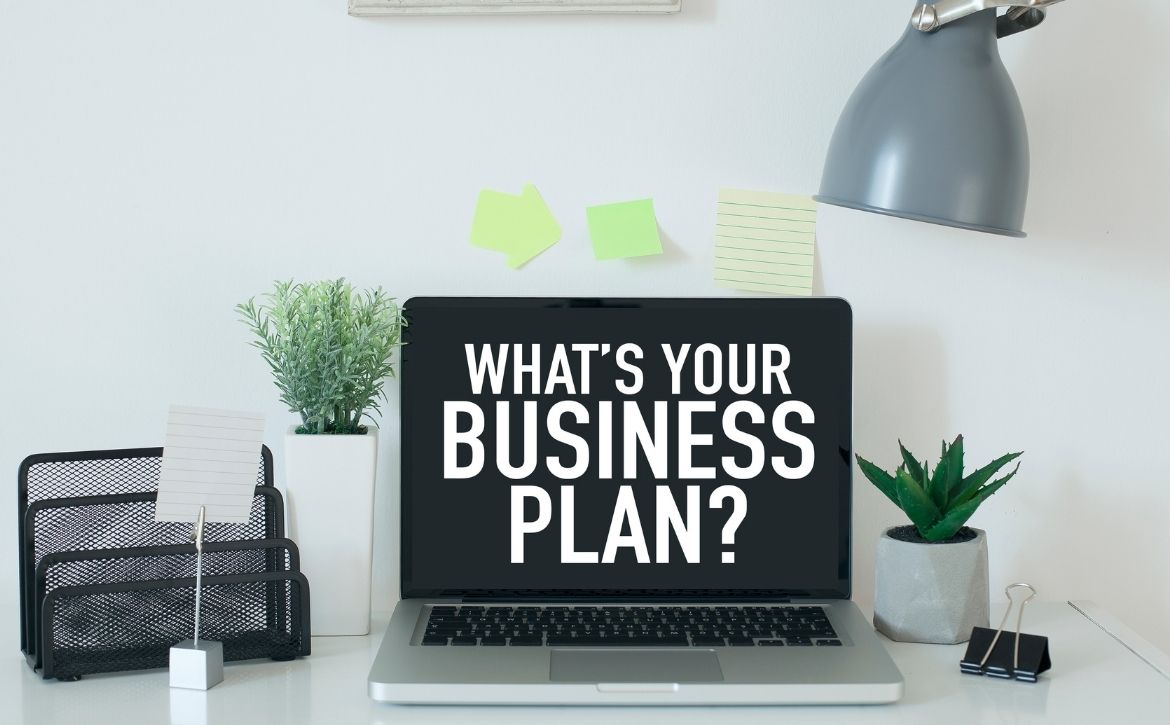
The 7 W’s of Business Plans
Think of your business plan like a GPS: it will guide you to where you want to go.
Read More
How your Accountant can Help your Farming or Agribusiness
A good Accountant Understands your Full Asset List
Read More
BAS – What you need to know about Business Activity Statements
As tempting as it is to be an ostrich and bury your head in the sand when you see your BAS debt, it is not a good business practice.
Read More
The Ins and Outs of Australian Business Names
Do you need to register your business name?
The short answer: Yes, except ….
Read More
Making sense of the super reforms
If you are waiting for the superannuation reforms announced in the Budget to pass Parliament before working out what they mean to you, you might miss out on any opportunities available.
When enacted, the reforms will represent the single biggest change to superannuation since its inception. While there has been a softening of the original Budget announcements, there are still some very big changes coming your way.
Accumulators: Under 65s
The reforms likely to impact on you are:
Reduction in non-concessional contribution caps
If you are close to retirement age and looking to build your super balance, this change is incredibly important. From 1 July 2017, the annual non-concessional contributions cap will be reduced to $100,000 (from the current $180,000).
This means that if you are approaching retirement age, you have until 30 June 2017 to use the current caps and contribute up to $540,000 this financial year. You can do this using the ‘bring forward’ rule. This rule allows you to bring forward up to three years worth of non-concessional contributions in one year (and then make no or limited contributions for the next two years until you reach your three year cap). The advantage of using the bring forward rule now is that your three years worth of contributions utilise the current caps. If you contribute more than $180,000 this financial year but not the full $540,000, you still trigger the bring forward rule but any further contributions from 1 July 2017 are subject to the new $100,000 cap. That is, instead of your cap being $540,000 across three years, it might be $460,000 or $380,000. And, if you wait until after 1 July 2017 to trigger the bring forward rule, you will only be able to contribute up to $300,000.
People with Large Super Balances & High Income Earners
The Government thinks that you are not using superannuation for its intended purpose – to fund retirement. As a result, the reforms introduce a whole series of measures that pare back the tax advantages for people with large super balances:
Non-concessional contributions capped at $1.6 million
Once your super balance has reached $1.6m, from 1 July 2017 you will no longer be able to make non-concessional contributions to super. So, you have until then to maximise your contributions (see Reduction in non-concessional contribution caps). Going forward, your super balance will be assessed at 30 June each year.
Concessional contributions cap reduced
From 1 July 2017, the annual concessional contribution cap will be reduced to $25,000 for everyone (currently $30,000 for those aged under 50 and $35,000 for those aged 50 and over).
30% tax on super extended to more taxpayers
High income earners with incomes of $300,000 or more pay 30% tax on contributions they make. From 1 July 2017, this threshold will reduce to $250,000.
Retirees and those Transitioning to Retirement
The reforms likely to impact on you are:
Earnings on fund income no longer tax free
From 1 July 2017, the income from assets supporting transition to retirement income streams will no longer be exempt from tax but included in the fund’s assessable income. For example, if your super fund earns interest from a term deposit, that interest is currently tax-free in a transition to retirement pension. From 1 July, that interest will be included in the fund’s assessable income.
Still Going: Over 65 and Still Working
Currently, if you are 65 or over, your superannuation fund can only accept contributions from you if you work at least 40 hours in a 30 consecutive day period in the financial year. The original Budget announcements abolished this work test. Unfortunately, this reform is not progressing and the work test will remain.
Contractors & Self-Employed
There is good news if you are partially selfemployed and partially a wage earner. Currently, to claim a tax deduction for your super contributions you need to earn less than 10% of your income from salary or wages. From 1 July 2017, the 10% rule will be abolished. This change will be useful for contractors who hold their insurance through super as they will be able to claim a personal tax deduction for these insurance premium contributions. The caveat here is that these contributions must remain within the reduced $25,000 concessional cap.
People with Low Super Balances and Broken Employment
There is a lot in the reforms for people who have not had the opportunity to build their super balances. The reforms likely to impact on you are:
‘Catch up’ super contributions
Normally, annual caps limit what you can contribute to superannuation. The reforms allow people with broken work patterns to ‘catch up’ their concessional super contributions. From 1 July 2018, people with super balances below $500,000 will be able to rollover their unused concessional caps for up to 5 years. Unused cap amounts can be carried forward from the 2018-19 financial year; which means the first opportunity to use these new rules will be 2019-20.
Tax offset for low income earners
A new tax offset will be available for people earning less than $37,000. The offset refunds any tax paid on super contributions.
Tax offset for topping up your spouse’s super
Currently, if your spouse earns less than $10,800, you can claim a tax offset of up to $540 if you make super contributions on their behalf. This offset is being extended to spouses who earn up to $40,000.
*Disclaimer: The information contained in this blog is a guide only and is not intended to be used in lieu of advice from your registered accountant.
Read More